%20%20-%20Menu.svg)




.png?width=879&height=549&name=Page%2074%20(1).png)
UPS vs USPS 2026: Which Is Cheaper and Faster?



In this blog
TL;DR: USPS vs UPS in 2026
-
USPS is cheaper for packages under about 2 pounds; UPS becomes more cost-effective above 10 pounds.
-
2026 rate changes narrowed the gap: USPS Ground Advantage is up 7.8%, Priority Mail up 6.6%, UPS base rates up 5.9%.
-
USPS is your only option for PO Boxes, APO/FPO/DPO military addresses, and many rural residential routes.
-
UPS gives you better tracking detail, broader express-service options, and accepts packages up to 150 lbs (USPS caps at 70 lbs).
-
For most e-commerce stores, the right answer is using both — and routing each order to the cheaper carrier automatically. ClickPost's carrier allocation makes that decision per order, per route, per weight tier.
If you're searching "UPS vs USPS," you're almost certainly trying to make one of three decisions:
1. which carrier to use for the package on your desk right now, 2. which carrier to default to for your e-commerce store going forward, or 3. whether the post office (USPS) is actually a different thing from UPS.
This guide answers all three, with 2026-current pricing and a clear decision framework — not vague "it depends" answers.
First, the headline answer: USPS and UPS are completely different organizations.
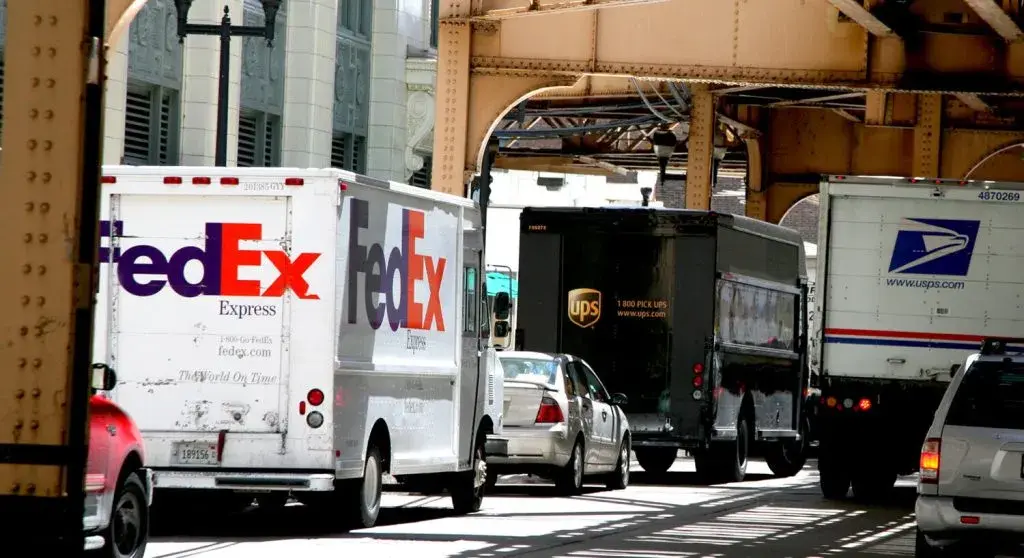
USPS (the United States Postal Service, sometimes just called "the post office") is a federal agency that delivers to every address in the United States, including PO Boxes and military addresses.
UPS (United Parcel Service) is a private parcel-logistics company. They overlap on parcel delivery, but they are built for different shipping jobs, and the 2026 rate changes have widened — not narrowed — the gap between what each carrier is good at.
UPS vs USPS at a glance: 2026 comparison table
This is the high-level scorecard. Each row is unpacked in the sections below.
| Feature | UPS | USPS |
| Best for | Heavier parcels, premium tracking, time-definite express | Small parcels, residential addresses, PO Boxes |
| Ground delivery speed | 1 to 5 business days | Ground Advantage: 2 to 5 business days |
| Max package weight | 150 lbs | 70 lbs |
| Tracking quality | Detailed, granular updates | Good, less granular than UPS |
| Delivers to PO Boxes | No | Yes |
| Delivers to APO/FPO/DPO | No | Yes |
| Residential surcharge | Yes, often applies | No comparable surcharge |
| Fuel surcharge | Yes | No domestic fuel surcharge |
| Saturday delivery | Available | Standard for many services |
| Flat-rate packaging | Limited | Strong Priority Mail flat-rate lineup |
| 2026 base rate increase | #ERROR! | #ERROR! |
Are UPS and USPS the same thing?
This question shows up in Search Console more than you'd expect — and it has direct consequences for which carrier you should pick. UPS and USPS are not the same. They are different organizations with different ownership, different delivery networks, and different pricing logic.
USPS is the United States Postal Service — a federal agency. It's part of the national postal network, which is why people often call it "the post office." Its mandate is to reach every address in the country, including residential PO Boxes, military addresses (APO, FPO, DPO), and rural delivery routes that aren't economical for private carriers. USPS pricing is regulated and tends to be lower for lightweight parcels because the cost is spread across a universal delivery network.
UPS is United Parcel Service — a private parcel-logistics company. It's built around moving parcels through a private network of hubs and trucks, with strong tracking visibility and time-definite delivery options. UPS pricing is commercial: base rates are competitive, but UPS adds residential surcharges, delivery-area surcharges, fuel surcharges, and pickup fees that USPS doesn't apply in the same way.
Practically: if you ship a 1-pound package to a residential address in a major US city, USPS will almost always be cheaper. If you ship a 15-pound package to a business address in a different city, UPS will often be cheaper after all surcharges. The rest of this guide breaks down exactly when each carrier wins.
Which is cheaper — UPS or USPS? The answer depends on package weight
This is the most-searched question in the entire UPS vs USPS keyword universe, and the honest answer is: it depends on what you're shipping. The 2026 pricing shows a clear pattern across weight tiers, and once you know the pattern, the decision becomes mechanical.
Below is a realistic comparison: the same package shipped from New York to Los Angeles (a cross-country, long-zone shipment that exposes the full pricing logic). All rates are 2026 retail pricing for direct comparison; negotiated rates for high-volume shippers can be materially lower for both carriers.
| Package weight | Cheapest USPS service (approx.) | Cheapest UPS service (approx.) | Winner |
| 1 lb | USPS Ground Advantage: $7.20 | UPS Ground: $14.50+ | USPS by ~50% |
| 3 lbs | USPS Ground Advantage: $14.10 | UPS Ground: $18.75 | USPS by ~25% |
| 5 lbs | USPS Ground Advantage: $22-25 | UPS Ground: $26-30 | USPS by ~15% |
| 10 lbs | USPS Ground Advantage: $32-36 | UPS Ground: $33-37 | Effectively tied |
| 15 lbs | USPS Ground Advantage: $42-46 | UPS Ground: $40-44 | UPS by ~5% |
| 20 lbs | USPS Ground Advantage: $51-55 | UPS Ground: $46-50 | UPS by ~10% |
| 30 lbs | USPS Ground Advantage: $66-70 | UPS Ground: $56-60 | UPS by ~15% |
| 50+ lbs | USPS Ground Advantage: $90+ (max 70 lbs) | UPS Ground: $75-85 | UPS (and USPS not available above 70 lbs) |
The pattern is consistent: USPS wins decisively under 5 pounds, the two carriers converge around 10 pounds, and UPS pulls ahead above 15 pounds. This is the single most useful framework when deciding which carrier to default to for any given order.
Disclaimer: These are directional 2026 retail comparisons based on published USPS Notice 123 and UPS 2026 Rate Guide materials. Final cost varies with ZIP pair, package dimensions, residential vs commercial address, account type, fuel surcharge cycles, and accessorial fees. For your own rates, use the USPS shipping calculator or a UPS shipping cost calculator with your specific shipment profile.
Which delivers faster — UPS or USPS?
Speed depends on the service you pick, not just the carrier. Here's how the most-used services compare for a cross-country shipment in 2026:
| Service | Carrier | Typical delivery window | Best for |
| Ground Advantage | USPS | 2 to 5 business days | Lightweight residential parcels |
| Priority Mail | USPS | 1 to 3 business days | Standard residential up to 70 lbs |
| Priority Mail Express | USPS | Overnight to 2 days, 7 days/week | Time-sensitive residential delivery |
| UPS Ground | UPS | 1 to 5 business days | Commercial and heavier residential |
| UPS 3 Day Select | UPS | 3 business days guaranteed | Mid-tier expedited shipping |
| UPS 2nd Day Air | UPS | 2 business days guaranteed | Time-sensitive with cost control |
| UPS Next Day Air Saver | UPS | Next business day (afternoon) | Overnight without morning premium |
| UPS Next Day Air | UPS | Next business day | Guaranteed overnight |
The headline speed comparison: for lightweight parcels, USPS Priority Mail (1-3 days) is often faster than UPS Ground (1-5 days), especially across shorter zones. For longer cross-country lanes and heavier parcels, UPS Ground tends to have a slight edge. For true time-definite delivery, UPS's Next Day Air family is more service-defined than USPS's options — UPS guarantees the delivery window, USPS does not on most ground services.
UPS Ground vs USPS Priority Mail: the most common decision
These two services overlap more than any other UPS-USPS pair, and the comparison decides most e-commerce shipping defaults.
Speed: USPS Priority Mail is generally faster (1-3 days) for parcels under 3 lbs going to residential addresses. UPS Ground is more reliable on heavier shipments and tracks more granularly across longer distances.
Cost: USPS Priority Mail is cheaper for lightweight parcels — and the flat-rate boxes give predictable pricing regardless of weight (up to 70 lbs) within the box dimensions. UPS Ground gets more competitive above 10 lbs.
Tracking: UPS Ground typically provides more checkpoint scans per shipment, which matters for higher-value orders and customer support volume.
Residential delivery: USPS Priority Mail has no residential surcharge. UPS Ground often does.
UPS SurePost vs USPS Priority Mail: the hybrid option
UPS SurePost is a hybrid service: UPS handles the long-haul leg, then hands off to USPS for last-mile residential delivery. This reduces UPS's residential surcharge exposure while still using the UPS network for most of the journey. SurePost is usually cheaper than UPS Ground for residential addresses but slower (typically 2-7 business days vs UPS Ground's 1-5). Compared to USPS Priority Mail, SurePost is cheaper for heavier packages but slower than Priority for lightweight ones.
For a detailed comparison, see our deep-dive on UPS SurePost vs UPS Ground.
UPS Next Day Air vs USPS Priority Mail Express: when you need it tomorrow
Both services promise overnight delivery, but the underlying networks and reliability profiles differ. USPS Priority Mail Express is generally cheaper, delivers 7 days a week (including Sundays and holidays in many markets), and includes flat-rate options. UPS Next Day Air offers more delivery-time precision (with the Saver, standard, and Early Morning tiers), better tracking detail, and tighter accountability if the package misses the promised window. For a single overnight shipment, USPS is usually the cheaper choice; for high-value or business-critical overnight shipping at volume, UPS is the more controlled service.
UPS 3 Day Select vs USPS Priority Mail: mid-tier expedited
UPS 3 Day Select gives you a guaranteed three-business-day delivery window with full UPS tracking. USPS Priority Mail typically delivers in 1-3 business days but without the same guarantee. For lightweight parcels where speed matters but overnight is overkill, USPS Priority Mail is almost always cheaper and often faster. For heavier parcels (>10 lbs) where you need delivery certainty, UPS 3 Day Select is worth the premium.
Tracking and reliability: UPS vs USPS in 2026
Tracking quality and reliability are two of the most-asked questions for e-commerce sellers — for good reason. "Where's my order?" support tickets are a real cost, and bad tracking turns one shipment problem into ten customer-service problems.
-
UPS tracking: Generally provides more scan events per shipment, more accurate ETAs, and more proactive exception alerts. UPS's tracking infrastructure is one of the strongest in the industry, which is why high-AOV stores and B2B shippers often default to UPS even when USPS would be cheaper.
-
USPS tracking: Has materially improved in recent years, especially on Ground Advantage and Priority Mail. The scan-event density is lower than UPS, and rural last-mile updates can lag. For most residential e-commerce, USPS tracking is adequate; for high-touch CX programs, UPS is still the reference.
-
Reliability (on-time delivery): UPS publishes guaranteed-service-refund (GSR) commitments on most services; USPS does not on standard ground services. In practical terms, both carriers deliver on-time at similar rates for residential parcels, but UPS gives you a service-level guarantee on premium services that USPS doesn't match.
If tracking and post-purchase visibility matter more than raw shipping cost, layering shipment tracking software on top of your carrier mix is the higher-leverage move. ClickPost's shipment tracking gives you uniform tracking events across all carriers, including USPS, UPS, and 500+ others — which means you can route on cost without sacrificing visibility.
Why is UPS more expensive than USPS for small packages?
This is one of the most common follow-up searches once people start comparing rates, and the answer is mostly about fees, not base rates. UPS's published base rates for small parcels are not dramatically higher than USPS's. The gap shows up in accessorial charges:
-
Residential surcharge: UPS charges extra for residential addresses. USPS does not apply a comparable charge.
-
Delivery-area surcharge: UPS charges extra for addresses in zones it considers harder to serve. USPS delivers to almost every US address as part of its universal mandate.
-
Fuel surcharge: UPS applies a domestic fuel surcharge that adjusts weekly. USPS does not apply a domestic fuel surcharge in the same way.
-
Pickup fee: UPS charges for daily pickup (with some account tiers exempt). USPS pickup from your address is free with most services.
Add these together and a $9 UPS base rate can finish at $14-16 on the invoice, while a $9 USPS base rate is usually $9. That's the structural reason USPS keeps winning the small-parcel cost comparison.
When to use UPS over USPS for your store?
UPS earns its spot in your carrier mix when one or more of these is true:
-
The package is over 10 lbs (the cost advantage of USPS narrows above this weight and reverses above 15 lbs).
-
The destination is a commercial address (no residential surcharge, fast commercial-route delivery).
-
You need time-definite delivery (UPS Next Day Air, 2nd Day Air, and 3 Day Select are guaranteed; USPS is not on most services).
-
Tracking detail matters for your customer service workflow (high-value orders, B2B, fragile or regulated goods).
-
The package exceeds 70 lbs (USPS won't accept it; UPS accepts up to 150 lbs).
-
You need international express to a major business destination (UPS Worldwide Express has tighter delivery windows than USPS international services).
When to use USPS over UPS for your store?
USPS is the right default when:
-
The package is under 5 lbs (USPS wins on cost decisively for the lightweight residential e-commerce profile).
-
The destination is a PO Box, APO, FPO, or DPO address (USPS is the only carrier that delivers to these).
-
You're shipping to a rural address (USPS's universal-delivery network often outperforms UPS on rural routes).
-
You can use flat-rate packaging (the predictability is valuable for high-volume fulfillment with consistent SKU dimensions).
-
Your store ships primarily lightweight residential and you want one default carrier (USPS is the simplest single-carrier setup for sub-5-lb e-commerce).
UPS pros and cons for e-commerce shippers
| UPS pros | UPS cons |
| Strong tracking and delivery visibility | More fees and surcharges than USPS |
| Cost-competitive on heavier packages (>10 lbs) | Pickup is not free by default |
| Time-definite express services with guarantees | Residential surcharge raises actual cost on most e-commerce orders |
| Accepts packages up to 150 lbs | No PO Box, APO, FPO, or DPO delivery |
| Better international express service to commercial destinations | Fuel surcharge adjusts weekly |
USPS pros and cons for e-commerce shippers
| USPS pros | USPS cons |
| Cheapest option for lightweight residential parcels | Tracking less detailed than UPS |
| No domestic fuel surcharge | Customer support is harder to escalate |
| Delivers to PO Boxes and military addresses | Maximum weight is 70 lbs (vs UPS at 150 lbs) |
| Strong flat-rate packaging lineup | Fewer guaranteed-service commitments |
| Free pickup with most services | International express is less time-definite than UPS |
The real answer: use both, and route by package profile
For most e-commerce stores, the question isn't "UPS or USPS?" — it's "how do I make the right choice on every single order without thinking about it?" That's a carrier allocation problem, not a carrier-selection problem.
The pattern is consistent across thousands of D2C and enterprise shippers: USPS handles the sub-5-lb residential volume, UPS picks up the heavier and commercial shipments, and the routing logic runs automatically based on weight, destination type, zone, and service-level expectations. The shippers who do this well move 10-20% of their shipping cost off their P&L compared to single-carrier defaults.
ClickPost's multi-carrier integrations connect USPS, UPS, and 500+ other carriers into one shipping stack. The carrier allocation engine evaluates each order against your business rules and picks the cheapest qualifying carrier. Estimated delivery dates stay consistent across carriers, so your customer-facing promise doesn't change. If a delivery exception happens, NDR management catches it before it becomes a returned-to-origin shipment. For stores ready to graduate from a single-carrier default, this is the architecture that scales.
How we compared UPS and USPS rates and services for 2026
This article was researched using current 2026 USPS and UPS published materials, including USPS Notice 123 (January 2026), USPS service pages, UPS domestic service pages, the 2026 UPS Rate Guide, and UPS accessorial charge schedules. Comparison shipments are modeled as a 5x5x5 inch box shipping from New York to Los Angeles to expose the full cross-zone pricing logic. Actual shipping quotes depend on ZIP Code pairs, package dimensions, residential vs commercial status, negotiated rates, and surcharge exposure — so this article is a decision framework, not a substitute for a live carrier quote.
Frequently asked questions about UPS vs USPS in 2026
Is USPS or UPS cheaper in 2026 for lightweight packages under 2 pounds?
USPS is generally cheaper in 2026 for packages under about 2 lbs, with USPS Ground Advantage retail starting around $7.20, while UPS Ground starts noticeably higher. The gap narrows as package weight rises and reverses above 15 lbs, where UPS Ground typically becomes the cheaper option.
What extra surcharges does UPS add that USPS does not charge?
UPS applies residential surcharges, delivery-area surcharges, fuel surcharges, and pickup fees that USPS does not apply in the same way. This is why a UPS base rate can look similar to USPS but finish 30-50% higher on the invoice for residential e-commerce orders.
Is UPS Ground faster than USPS Ground Advantage for cross-country shipments?
UPS Ground is generally one to five business days; USPS Ground Advantage is generally two to five business days. UPS Ground has a slight edge on longer cross-country lanes, though the difference is not always dramatic.
Which is cheaper for a 5 lb package — UPS or USPS?
USPS Ground Advantage is typically cheaper for a 5 lb package, with cross-country rates around $22-25 in 2026 versus UPS Ground at $26-30. The USPS advantage is smaller at 5 lbs than at 1-2 lbs and effectively disappears around 10 lbs.
Which is cheaper for a 10 lb package — UPS or USPS?
At 10 lbs, USPS Ground Advantage and UPS Ground are roughly tied in 2026 (both around $32-37 cross-country). Either carrier is a reasonable choice; the deciding factor is usually whether the destination is residential (favor USPS) or commercial (favor UPS).
Which is cheaper for a 20 lb package — UPS or USPS?
At 20 lbs, UPS Ground typically becomes the cheaper option, with cross-country rates around $46-50 versus USPS Ground Advantage at $51-55. The UPS advantage grows above 20 lbs and is significant above 30 lbs.
Is UPS the same as the post office?
No. The post office is the United States Postal Service (USPS), a federal agency. UPS is United Parcel Service, a private parcel-logistics company. They are completely different organizations with different ownership, pricing, networks, and service offerings.
Does UPS or USPS deliver to PO Boxes and military addresses?
USPS delivers to PO Boxes and military addresses (APO, FPO, DPO); UPS does not. If the destination requires a PO Box or military address, USPS is the only practical option regardless of how UPS's pricing compares.
Is UPS or USPS more reliable for tracking?
UPS tracking provides more scan events per shipment, more accurate ETAs, and stronger proactive exception alerts. USPS tracking has improved significantly but is still less granular than UPS, especially on rural last-mile routes. For high-value or B2B orders, UPS tracking is the stronger choice.
How do 2026 rate increases affect UPS vs USPS pricing for small businesses?
UPS implemented a 5.9% average increase in base and accessorial rates for 2026. USPS raised Ground Advantage by 7.8%, Priority Mail by 6.6%, and Priority Mail Express by 5.1%. The increases narrowed USPS's cost advantage on heavier ground shipments more than older comparisons suggest.
Should I use UPS, USPS, or both for my e-commerce store?
For most stores, the answer is both. USPS handles your sub-5-lb residential volume more cheaply, and UPS becomes more cost-effective above 10 lbs and for commercial destinations. A multi-carrier shipping setup with automated carrier allocation routes each order to the right carrier without manual decisions.
Does UPS SurePost use USPS for delivery?
Yes. UPS SurePost is a hybrid service where UPS handles the long-haul leg and hands off to USPS for residential last-mile delivery. This avoids UPS's residential surcharge while still using the UPS network for most of the journey, typically at lower cost than UPS Ground but with a longer delivery window (2-7 business days).